

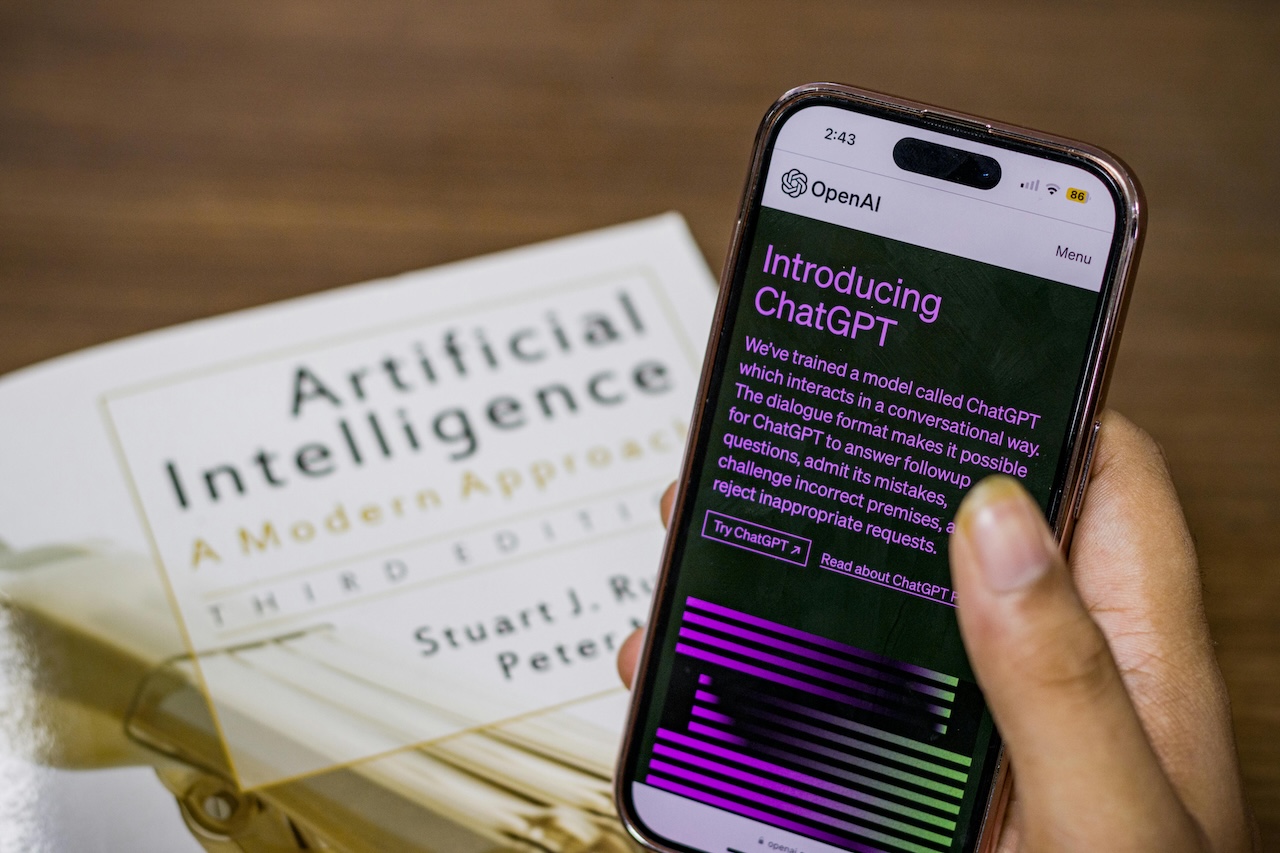
In the span of a decade, artificial intelligence has moved from the pages of academic journals to the center of every major business strategy conversation in the world. What was once discussed as a distant, theoretical force has become one of the most consequential technological shifts since the Industrial Revolution — and its effects are accelerating.
For executives, investors, and policymakers, understanding AI is no longer optional. It is the defining literacy of the modern economy.
The Scale of the Transformation
The numbers are staggering in scope. According to research from multiple global institutions, AI is projected to contribute trillions of dollars to the world economy over the coming decade. McKinsey Global Institute has estimated that AI could deliver significant productivity gains across knowledge work alone, automating tasks that currently consume the working hours of hundreds of millions of employees worldwide.
But aggregate figures can obscure what is actually happening at the ground level. Across industries as varied as financial services, healthcare, logistics, retail, and energy, AI is not simply automating repetitive tasks — it is transforming the nature of decision-making itself.
In financial services, algorithmic trading and AI-powered risk models now process information at speeds and scales impossible for human analysts. In healthcare, deep learning systems are diagnosing disease from medical imaging with accuracy rates that match or, in some cases, exceed those of experienced clinicians. In manufacturing, predictive maintenance platforms powered by machine learning have cut unplanned downtime at major industrial operations by meaningful percentages, delivering direct and measurable returns on investment.
Three Foundational Shifts Every Business Leader Must Understand
The practical impact of AI on business can be distilled into three interlocking shifts that cut across every sector.
The first is the shift from structured to unstructured data advantage. For decades, enterprises competed on their ability to capture and analyze structured data — spreadsheets, databases, transaction logs. AI, particularly large language models and neural networks, has unlocked the value of the vast ocean of unstructured data: documents, emails, customer service transcripts, sensor feeds, social signals. Companies that can harness this data now hold an informational edge that was simply not available five years ago.
The second shift is the compression of the expert-to-decision cycle. Historically, turning raw information into a strategic decision required layers of human expertise, analysis, and review. AI-powered decision-support tools are compressing this cycle from days to hours, and in some domains, from hours to seconds. This acceleration is forcing organizations to rethink their operating models, their approval chains, and even their hiring criteria.
The third is the democratization of technical capability. Cloud-based AI platforms from major technology providers have lowered the barrier to entry for deploying sophisticated machine learning capabilities. A mid-sized retailer can now access demand forecasting tools that would have required a dedicated data science team of dozens just a few years ago. This democratization is simultaneously an opportunity for smaller players and a threat multiplier for larger, slower-moving incumbents.
The Labor Market Question Is More Nuanced Than the Headlines Suggest
No discussion of AI’s economic impact is complete without addressing workforce transformation — and no topic in this domain generates more heat than the question of job displacement. The reality, as informed by labor economics rather than technology hype, is considerably more nuanced than either the utopian or the apocalyptic narrative suggests.
History offers a useful frame. Each major wave of automation — mechanization, electrification, computerization — generated substantial near-term displacement in specific occupational categories while simultaneously creating new categories of work that were difficult to anticipate in advance. There is no strong reason to believe the AI wave will be fundamentally different in this structural sense, though the pace and breadth of disruption may be more challenging to absorb.
What the data does suggest clearly is that the impact will be highly uneven across skill levels, industries, and geographies. Routine cognitive tasks — data entry, basic analysis, template-based writing, first-tier customer service — face significant automation pressure. Meanwhile, roles requiring deep contextual judgment, creative synthesis, interpersonal skills, and complex physical dexterity remain substantially more resilient. The premium on uniquely human capabilities is rising, not falling.
For organizations, the imperative is not simply to adopt AI, but to invest in workforce reskilling with the same seriousness they are investing in the technology itself. The companies navigating this transition most successfully are those treating it as a human capital challenge as much as a technology deployment challenge.
The Governance Gap: Why Regulation Is Racing to Catch Up
The speed of AI advancement has outpaced the institutional capacity of most governments to respond with coherent policy. This governance gap represents one of the most significant structural risks in the current AI landscape — not because regulation is inherently desirable, but because the absence of clear rules creates uncertainty that is itself costly for enterprises planning long-term investments.
The European Union’s AI Act represents the most comprehensive legislative attempt to date to create a risk-tiered framework for AI deployment. It establishes strict requirements for high-risk applications — in areas such as healthcare, critical infrastructure, and legal proceedings — while creating lighter-touch regimes for lower-stakes uses. Whether this approach proves workable in practice remains to be tested, but it has set a global benchmark that other jurisdictions are watching closely.
In the United States, the approach has been more fragmented, with sector-specific guidance from agencies including the FDA for medical AI and the SEC for financial applications, alongside executive orders establishing broad principles without yet creating enforceable rules. The result is a patchwork that places significant compliance burden on enterprises operating across multiple domains and jurisdictions.
For global businesses, the practical advice from legal and compliance experts is consistent: build AI governance infrastructure now, before regulation makes it mandatory. Organizations that develop rigorous internal frameworks for model documentation, bias testing, human oversight, and audit trails will be better positioned regardless of how the regulatory landscape ultimately resolves.
Strategic Differentiation in the AI Era
Perhaps the most important strategic insight for business leaders is this: AI itself is rapidly becoming a commodity. The underlying models and infrastructure are increasingly available to any organization with the budget to access them. The durable competitive advantage will not come from having AI, but from deploying it in ways that are deeply integrated with proprietary data, distinctive operational processes, and hard-to-replicate organizational capabilities.
The companies building lasting advantages are doing so in three ways. They are accumulating unique data assets through customer relationships, operational processes, and sensor networks that competitors cannot easily replicate. They are investing in the organizational change management required to actually integrate AI into workflows rather than merely deploying it in isolated pilots. And they are developing what might be called AI fluency at the leadership level — the capacity to ask the right questions about what the technology can and cannot do, and to make strategic bets with clear-eyed assessment of both opportunity and risk.
The organizations falling behind share a common profile: they are treating AI adoption as a technology procurement exercise rather than a strategic transformation, and they are discovering that deploying a model and changing an organization are two very different things.
Looking Ahead: The Variables That Will Define the Next Decade
Several factors will shape how the AI transformation unfolds over the coming decade, and business leaders would do well to monitor them closely.
The trajectory of model capability is the most obvious variable, but perhaps the least useful to focus on. Capabilities will continue to advance; that much is nearly certain. What matters more is the rate of diffusion across industries, the evolution of regulatory frameworks, and the pace at which organizations can develop the institutional capabilities to deploy AI effectively at scale.
Geopolitical competition over AI infrastructure — chips, data centers, foundational model development — introduces significant supply chain and policy risks that are increasingly relevant for global enterprises. The concentration of advanced semiconductor manufacturing in a small number of geographic locations represents a structural vulnerability that governments and corporations are only beginning to grapple with seriously.
Finally, the question of trust will be decisive. AI systems that produce outputs users cannot understand, verify, or contest will face persistent adoption barriers regardless of their technical performance. The emerging fields of explainable AI and AI alignment are not merely academic concerns — they are prerequisites for the broad enterprise and social adoption that will be required to realize the full economic potential of the technology.
The Bottom Line
Artificial intelligence is not a trend, a bubble, or a speculative bet on a distant future. It is a fundamental restructuring of the competitive landscape across virtually every industry, playing out in real time. The organizations that will emerge strongest from this period of disruption are not necessarily those with the largest technology budgets, but those with the strategic clarity to understand what AI actually enables, the organizational discipline to deploy it effectively, and the wisdom to recognize that technology is only as powerful as the human judgment guiding it.
The question for every executive, investor, and policymaker is no longer whether to engage seriously with AI. That question has been answered. The question now is how — and how quickly.